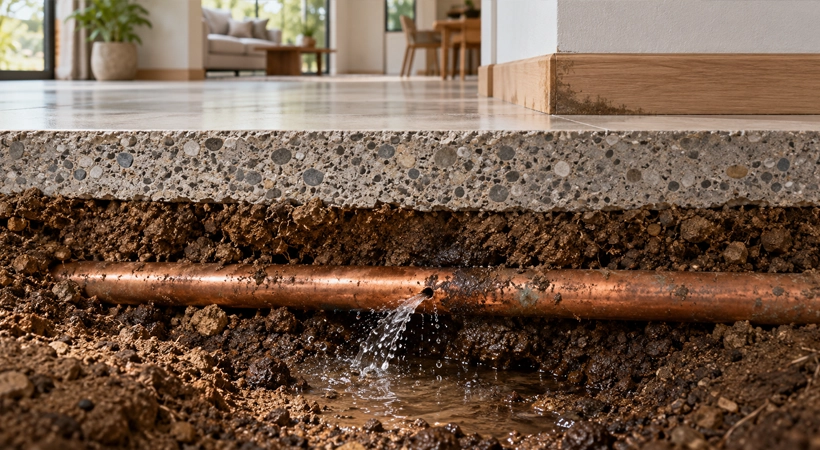
A concealed water leak is a leak in a pipe you cannot see: inside a wall, under a floor, or beneath the concrete slab your house sits on. One of the clearest early signs is your water meter still moving when every tap and appliance is off. Other signs include a water bill that jumps for no reason, damp or warm patches on the floor, and the sound of running water when nothing is on.
They are not rare. Barwon Water says that, on average, one in ten properties has a leak the owner may not know about. Under a slab, a leak can run for a long time before anything shows inside the house.
This guide covers the warning signs, a simple meter test you can do yourself, how plumbers find a leak under concrete, and what the repair usually involves. If you already suspect a leak, you can contact our team at APG Plumbing and we will talk you through the next step.
The warning signs of a concealed water leak
No single sign proves there is a leak under your slab, but several together make a strong case for testing. Watch for:
- A water bill that rises with no change in how you use water, or a potential-leak notification from Barwon Water.
- The meter moving when everything in the house is turned off.
- The sound of running water in a wall or floor when no tap is on.
- Warm spots on the floor, which can point to a leaking hot water pipe under the slab.
- Damp carpet, lifting floorboards, or cracked or loose tiles with no obvious source.
- A musty smell or mould along skirting boards or the bottom of walls.
- Lower water pressure than you are used to.
- A patch of soggy ground or unusually green grass along the line of the water pipe outside.
Symptoms point; they do not prove. Damp can also come from a roof, a shower seal or rising damp, so the next step is a test, not a guess. If you also have drains backing up or smelling, our drainage and pipe locating service covers that side of the plumbing.
How to test your water meter for a leak
The meter test is a quick way to check for a hidden leak before calling anyone. Barwon Water publishes the steps for both meter types.
If you have a digital meter
1. Turn off all taps and appliances that use water. Leave the stop tap next to each toilet on.
2. Find the meter. At a house it is usually outside near the front gate or fence; at a unit it may be near the front door or in a service cupboard.
3. Open the cover, wake the screen by placing a finger over the three dots, then hold your finger there for three seconds to switch to the kL/h screen, which shows how much water is flowing.
If the kL/h screen shows water flowing while everything is off, water is going somewhere. Barwon Water puts the test itself at 30 seconds to a minute.
If you have a mechanical meter
Turn everything off, record the reading or take a photo, then leave the water unused for two hours, because Barwon Water says it can take that long for a change to show. Compare the readings. Barwon Water also suggests a toilet check before you start: add six to eight drops of food dye to the cistern, wait five minutes, and look for colour in the back of the bowl. Do not flush during the test. If the meter confirms a leak you cannot see, our leak detection and emergency repairs page explains how we can help.
Why a leak under a concrete slab is hard to find
In many homes, water pipes run in or under the slab before they come up into the kitchen, bathroom and laundry. When one of those pipes leaks, you have a concealed water leak, and the water has nowhere obvious to go. It can soak into the ground, track along the pipe, or come up through a joint in the slab some distance from where the leak actually is.
That is why the damp patch is not always the place to dig. A small leak may never show inside at all and only appear on the bill. A larger one, or a burst pipe under the slab, can lift flooring or push water up through tiles quickly. If water is coming into the house now, see our emergency plumbing service
Suspect a Hidden Leak? Talk to APG Plumbing
If your meter keeps moving with everything off, tell us what you are seeing and we will help.
How plumbers find a leak under the slab
Finding a concealed leak is about narrowing it down before any concrete is touched. Depending on the house and the pipework, plumbers may use some of these methods:
- Isolating sections of the water supply to work out which line is losing water.
- Pressure testing a line to confirm whether it holds pressure.
- Acoustic listening equipment that picks up the sound of escaping water through the floor.
- Thermal imaging, which can show a warm trail where a hot water pipe is leaking.
- Tracer gas, a safe gas pushed through the pipe and detected where it escapes.
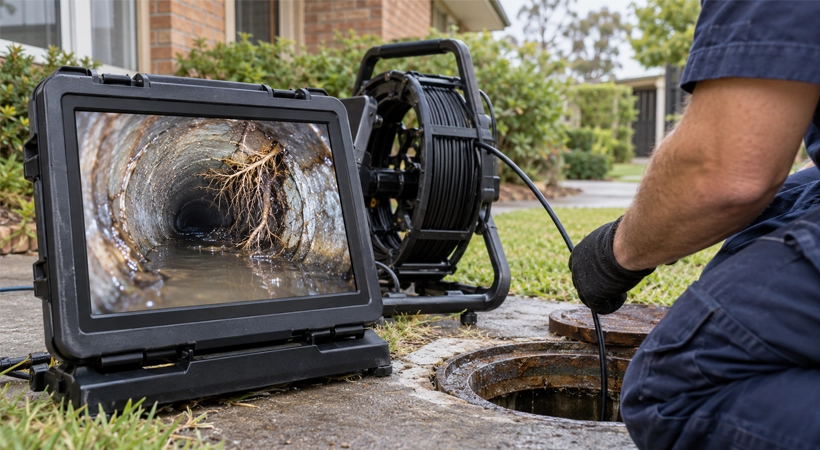
Not every job needs every method, and different plumbers use different equipment. Ask your plumber how they will locate the leak and how precisely they expect to mark it, because the more accurately the leak is found, the smaller the hole in your floor. Pipe locating is also part of our drainage and CCTV inspection work.
Burst pipe under the slab: what the repair usually involves
Once the leak is located, there are usually two broad ways to fix it:
- A targeted repair: cut a small opening in the slab at the marked spot, repair the pipe, and patch the concrete and floor covering.
- A reroute: leave the failed pipe in the slab, cap it off, and run a new line through the walls or ceiling instead.
Which one makes sense depends on where the leak is, what the floor is finished with, how old the pipework is, and whether more leaks along the same line are likely. A good plumber will explain the trade-off before starting, including how much floor needs to come up. APG Plumbing also handles pipe repairs, replacements and hot water repairs if the leak turns out to be on a hot water line.
Who pays for a concealed water leak in Geelong?
Barwon Water is responsible for the water meter and the pipes leading away from your property. The property owner is responsible for maintaining and repairing all pipes from the meter to the house, including garden taps.
There is some help with the bill. If you receive an unusually high bill because of a leak you could not reasonably have detected, Barwon Water may offer a one-off allowance to cover a portion of the increased water usage charges. Check eligibility with Barwon Water directly, and keep the plumber’s invoice and a note of where the leak was. For any damage to floors or walls, read your home insurance policy wording or ask your insurer.
What to do right now if you suspect a leak
1. Do the meter test above.
2. If the meter shows water flowing and you cannot find a dripping tap or running toilet, book a plumber to locate the concealed water leak.
3. If a pipe has burst or water is coming up through the floor, turn the water off at the stop tap at the meter and call for urgent help.
4. Photograph any damp patches, cracked tiles or meter readings, with dates.
5. Keep any leak notification from Barwon Water.
Where to find us
APG Plumbing is based at Shed 4, 40 Essington Street, Grovedale VIC 3216, and works across Geelong and the surrounding area. Call 03 5292 8850 or email office@apgservices.com.au
Final thoughts: How do you know if you have a concealed water leak?
The simplest check is the water meter. If it is still recording flow when every tap and appliance in the house is off, and the toilets are not running, water is escaping somewhere you cannot see. A rising bill, warm or damp patches on the floor, cracked tiles or the sound of running water make the case stronger.
Test the meter first, then call a plumber to find the leak before anything is dug up.
APG Plumbing helps Geelong homes with emergency repairs and burst pipes, pipe locating, general plumbing, hot water and gas fitting.
If your meter is moving and you cannot see why, contact our team and we will help you work out where the water is going.
FAQ
What is a concealed water leak?
It is a leak in a pipe you cannot see, such as one inside a wall, under a floor or beneath a concrete slab. It often shows up first as a higher water bill or a meter that keeps moving.
Can you have a slab leak and not know it?
Yes. A small leak under a slab can run for a long time without any damp showing inside. Barwon Water says that on average one in ten properties has a leak the owner may not know about.
How do I check for a leak under my concrete slab?
Start with the meter test: turn off every tap and appliance and read the meter. If water is still flowing and the toilets are not running, call a plumber to locate the leak.
Who pays for a water leak on my property in Geelong?
The property owner is responsible for pipes from the meter to the house. Barwon Water may offer a one-off allowance on usage charges for a leak you could not reasonably have detected.
How is a slab leak fixed?
Usually one of two ways:
- a targeted repair through a small opening in the slab at the located spot
- a reroute, where the old pipe is capped and a new line runs through the walls or ceiling
Get Help With a Hidden Water Leak
Call 03 5292 8850 or send an enquiry, and our team will help you find where the water is going.